


which means that the global governance system must keep pace with the times,
Products Description
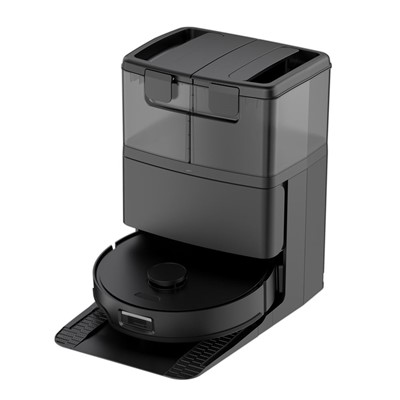
The self-emptying robot vacuum is a mopping-capable robotic vacuum paired with an auto-empty dock. After cleaning, the robot returns to the dock, where a powerful fan instantly pulls hair, dust, and debris from its small dustbin into a large, sealed bag inside the station. The 3-liter bag lasts 30–45 days for an average home. When it's full, just lift the bag out and toss it – no mess, no dust.
Key specs
| Docking station suction power | ≥1200Pa |
| Robot suction power | 3000Pa / 4000Pa / 5000Pa |
| Dust bag capacity | 3L |
| Dust bag material | EVA + non-woven fabric with self-sealing closure |
| Water tank capacity | 200ml (electronically controlled) |
| Battery capacity | 5200mAh |
| Max coverage | Under 200m² |
Technical principle
When the robot returns to the dock, a centrifugal fan inside the station creates negative pressure between the robot's dustbin and the dock's dust bag. A one-way valve at the bottom of the robot's bin opens, and the airflow rapidly carries debris toward a cyclone separator inside the dock. Large particles fall first, while fine dust goes into the bag. Once emptying is complete, a silicone seal around the bag's opening closes automatically to prevent dust leakage. The whole process takes 10–15 seconds.
Core advantages
●Truly sealed dust bag – Rigid plastic collar + silicone seal keeps dust inside when you pull the bag out; no cloud of dust like cheaper models.
● Anti-clogging air path – The internal duct has wide-radius bends to prevent hair buildup and loss of suction over time.
● Real bag-full detection – Uses air pressure to sense when the bag is truly full, not just a fixed number of cycles. No guessing or wasteful changes.
●Works with mopping – No need to remove the mopping pad; auto-empty works even after wet mopping .
Use cases
- Multi-pet households – Daily shedding means a regular robot's bin fills in two days; this dock stretches it to over two weeks, solving constant emptying and hair tangling.
- Allergy sufferers – Traditional emptying sends dust flying; the sealed bag goes straight into the trash with zero allergen contact.
- Rental or small apartments – Busy owners often forget to empty the bin; place the dock in a corner and deal with the dust bag once a month.
- Office spaces – Nightly autonomous cleaning; staff arrive in the morning to find all dust and debris already captured in the bag – no extra janitor work.
Optional configurations
- Dust bags: Standard non-woven (3-pack) / Anti-bacterial with silver ions
- Side brushes: Rubber (anti-tangle) / Nylon bristle (deep cleaning)
- Mop pads: Disposable wet mop cloths / Washable microfiber pads
- Dock base: Without bottom tray / With removable anti-slip mat
FAQ
Q1: How long does a dust bag last in a self-emptying robot vacuum?
A:For a typical home cleaning 50m² daily, the 3L bag lasts 30–45 days.
Q2:What happens if I don't change the bag when it's full?
A:The app will send a reminder. Auto-empty efficiency will drop, but the robot's own cleaning is not affected.
Q3:Is auto-empty noisy?
A:The process takes 10–15 seconds at ~75dB (similar to a vacuum on high). Best scheduled during the day or when you're away.
Q4: Can I use the robot without the dock?
A:No. This model's robot dustbin holds only 300ml, so the dock is essential for long periods without manual emptying.
Q5:Are dust bags universal?
A:No. Each brand uses different connectors. This model requires official bags (collar dimensions 85×42mm).
Q6:Can it suck up wet waste (soup, noodles) into the bag?
A:No. The dock is designed for dry debris only. Wet waste will clog the bag and cause mold.
Hot Tags: great country to safeguard[[ProductCateName]], Apple Watch, Connector, Constant Temperature dsdadad